
Artistic Personalities and the Path to Dance: Why People Find Zouk in Iceland

Many individuals who are drawn to dance share similar underlying traits. Across different experiences, a consistent theme emerges: an inclination toward artistic expression, a strong connection to music, and a desire to move.
Within the Zouk community in Iceland, this pattern is clear. People arrive at dance through different paths, but often with a shared foundation shaped by earlier experiences, personal interests, and a natural pull toward expression.
Early Exposure to Dance
For some, the relationship with dance begins in childhood.
Several dancers were introduced to movement at a young age through structured solo styles such as ballet or other forms of performance dance. These early experiences were often shaped by external factors, such as parental encouragement or the intention to develop coordination and posture.
In some cases, this early involvement extended into competitive dance. While it provided technical training and discipline, it also introduced pressure. Over time, this shifted the focus away from enjoyment and toward performance outcomes.
As a result, many stepped away from dance during adolescence.
Challenges such as the financial demands of competition, increasing pressure to perform, and strict expectations around appearance contributed to this decision. Some also experienced issues related to body image within these environments, where certain physical standards were emphasized.
Despite stepping away, the connection to dance remained.
Leaving Dance and Returning Later
A recurring pattern is the return to dance later in life.
Even after years without dancing, many describe a persistent sense of missing it. Dance had previously been a consistent part of their routine, and its absence was noticeable.
When the opportunity to return emerged, it was often through partner dancing. Unlike earlier forms that emphasized choreography and precision, partner dancing introduced improvisation, responsiveness, and connection.
This change in structure altered their perception of dance.
Instead of focusing on execution and perfection, partner dancing introduced new skills such as listening, connection, and improvisation.
A Shift Toward Improvisation and Connection
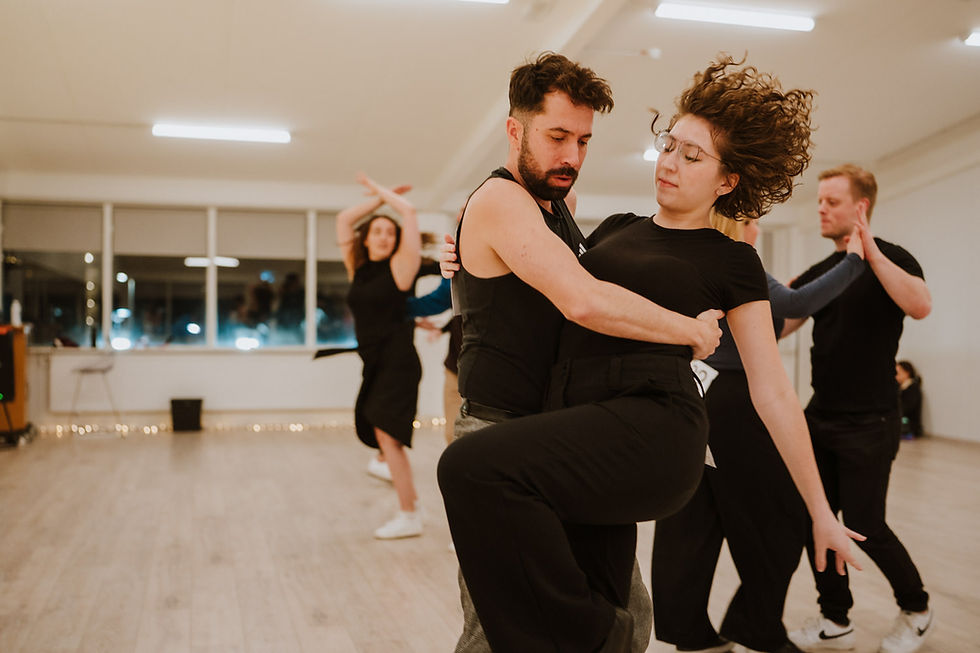
For many, partner dancing was the first time dance felt real and not choreographed.
The improvisational nature of partner dances such as Zouk allows dancers to respond to both the music and their partner in real time. This creates a more dynamic and less restrictive experience compared to structured solo dance forms or competitive dancing.
The emphasis moves away from memorization and toward awareness. This transition is particularly significant for individuals who may have previously felt disconnected from dance. The spontaneity and fluidity of partner dancing make it more enjoyable and engaging.
Always Drawn to Dance
Not all dancers had formal training in childhood.
Some describe themselves as having always been interested in dance, even without access to classes. Growing up in areas with limited opportunities meant that dance existed primarily in informal settings.
This included dancing at home, at social events, or in nightlife environments. For these individuals, dance was less about learning specific techniques and more about enjoyment and self-expression. Music played a central role, and movement developed naturally in response to it.
When later introduced to structured classes, such as Zouk, this existing familiarity with movement often supported their learning process.
The Role of Music

A strong connection to music is another consistent theme amongst dancers.
Many individuals drawn to dance describe themselves as people who "love music." Movement becomes a way to interact with music on a deeper level, coordinating their body with the music.
Zouk can be danced to many different types of music, including slow and relaxed music to fast-paced and upbeat music. Many students describe Zouk music as "diverse" and is one of the primary reasons they enjoy dancing. Zouk gives dancers the chance to interpret the rhythm, melody, and dynamics of songs in different ways, giving them the space to express what they hear.
Dance as a Form of Expression
Dance also functions as a means of self-expression.
Rather than focusing solely on technique or performance, many dancers are motivated by the opportunity to explore movement in a personal way. Zouk supports this through its emphasis on individuality and connection.
Each dancer develops their own style over time. This process allows for exploration, creativity, and a deeper engagement with both the music and the partner. The more experienced a dancer becomes, the more freedom and confidence they have to add their own "spice" to the dance.
Zouk in the Icelandic Context
In Iceland, Zouk attracts individuals who are already inclined toward artistic and expressive activities.
This includes those with previous dance experience, as well as those who have always been drawn to music and movement without formal training.
The structure of Zouk, combining technique with freedom, aligns with these tendencies.
It provides a framework for learning while allowing space for personal interpretation.
Exploring Dance Through Zouk
For individuals who recognize these patterns in themselves, Zouk offers an entry point into dance that differs from more traditional or competitive environments.
It does not require prior experience or a specific background. Instead, it builds on existing interests in music, movement, and expression.
Contact us if you're interested in coming for a free class!
Comments